

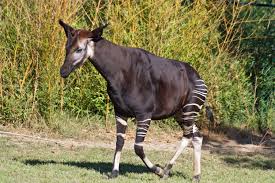
Have you ever seen something in nature that seemed too good to be true? Some animals once thought to be myths actually do exist in the real world. Africa’s version of a variation of the unicorn is one of them. At the beginning of the 20th century, Uganda’s British governor Sir Harry Johnston made the discovery of a lifetime when he procured parts of some creature’s body and skeleton that he sent to be authenticated. This creature became known as an okapi. Previously thought to be similar to a striped horse with a protruding horn, the okapi was dubbed “African unicorn”. The new species was determined to be a member of the giraffe family, but clearly with a shorter neck. In the world of cryptozoology, this animal has long been considered elusive but legendary. Today, the okapi lives in central Africa’s Congo region. In terms of any former cryptid, this is one that had high status after having been designated as the official mascot of a former society. Okapi was long thought to be just a figment of imagination, only to eventually be verified into the animal kingdom. Even though its closest relative is a giraffe, it somewhat resembles a zebra with an equine body and black and white stripes on its lower regions. Local tribes in Africa felt like its stripes were similar to the markings on their ammo, and the name stuck for this jungle dweller. This is truly one example of why so many people feel so strongly that new and undiscovered creatures remain out there, as well as why unicorns are sometimes thought to be real. Truth really does meet fiction here.
Former cryptid proved real




Good to know!